This guide explains phishing-resistant mfa: a practical rollout plan for businesses and the practical points readers should know before changing a production security environment.
Passwords alone do not provide enough protection for modern business accounts. Multi-factor authentication adds a second verification step, but not every MFA method offers the same resistance to phishing and account takeover attempts. A practical phishing-resistant MFA rollout focuses first on the accounts whose compromise would create the greatest security or business impact.
Begin by mapping identity systems and user groups. Prioritize administrators, remote-access users, finance staff, help-desk personnel, developers with production access, and employees who handle sensitive records. Identify which applications support stronger methods such as security keys or modern passkey-based approaches, and where temporary alternatives are necessary. The objective is to reduce exposure without leaving critical business services inaccessible.
Define an authentication standard that matches the risk. CISA recommends aiming for phishing-resistant MFA, while recognizing that organizations may need a staged path. Security keys are a strong option for many environments. Authenticator applications with number matching can be a useful improvement where stronger methods are not yet available. Text or email codes should not be treated as the preferred long-term choice when a more resilient method is supported.
Plan recovery before enforcing the new requirement. Users will lose devices, change phones, travel, or encounter enrollment problems. Document a verified recovery process with strong identity proofing, limited help-desk authority, and audit logs. An overly permissive reset process can undermine the protection MFA was meant to provide.
Roll out in waves. Start with a small pilot, gather usability feedback, test help-desk procedures, and then expand to high-priority groups. Monitor failed sign-ins, enrollment completion, recovery requests, and exceptions. Communicate why the change matters and how employees can get support; adoption improves when users understand that the control protects both company and personal information.
Review the program periodically as applications, user roles, and available authentication methods change. Professionals seeking a structured way to practice identity-hardening decisions can explore CyberWorkshop’s hands-on cybersecurity training.
Table of Contents
Key Takeaways
- Prioritize administrators and other high-impact accounts first.
- Prefer phishing-resistant methods where supported and document any temporary exceptions.
- Design secure recovery and staged rollout processes before enforcement begins.
References
- https://www.cisa.gov/audiences/small-and-medium-businesses/secure-your-business/require-multifactor-authentication
- https://www.cisa.gov/sites/default/files/2023-01/fact-sheet-implementing-phishing-resistant-mfa-508c.pdf
- https://www.cisa.gov/sites/default/files/publications/CISA_CEG_Implementing_Strong_Authentication_508_1.pdf
Phishing-resistant MFA rollout steps
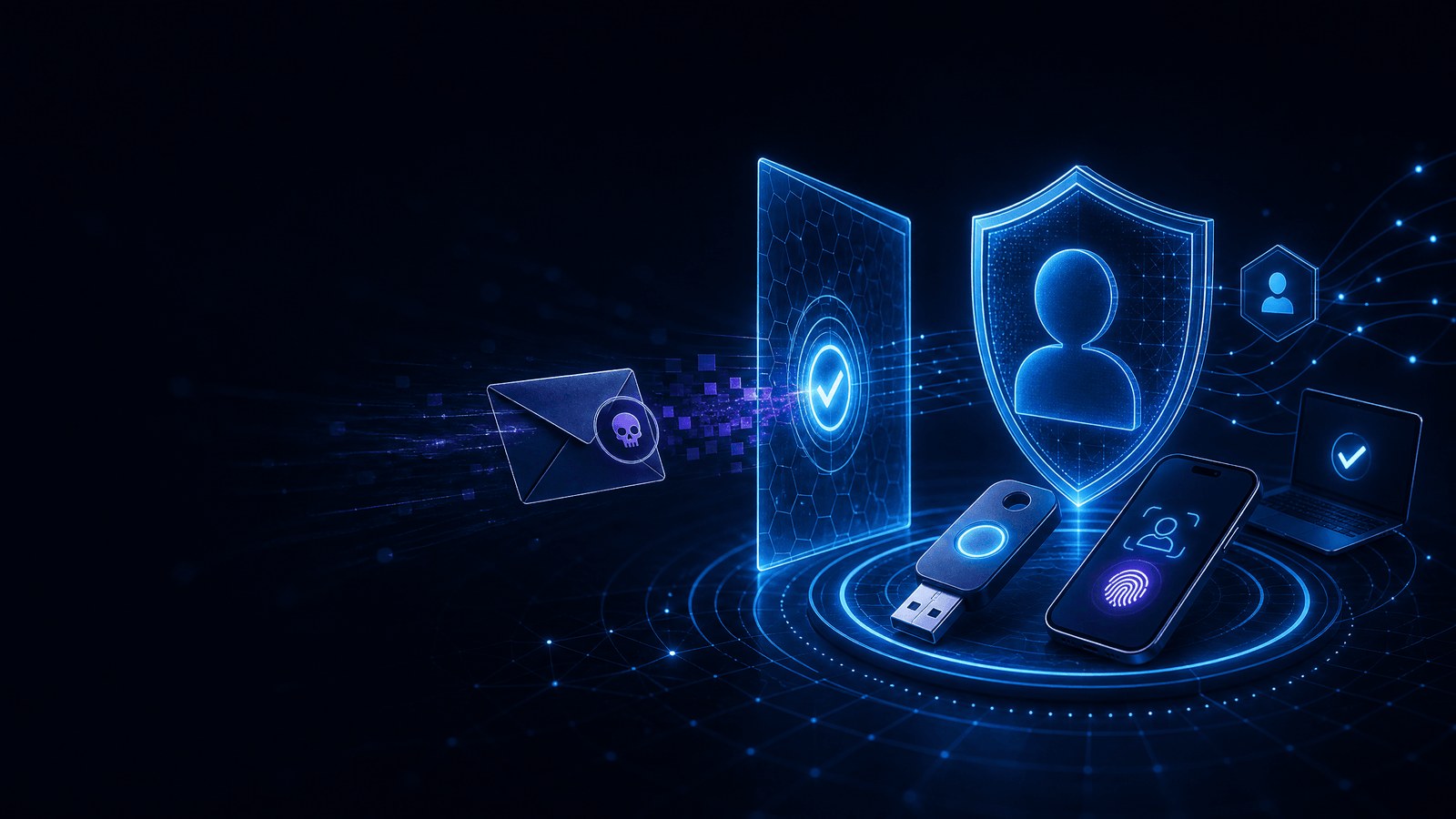
A phishing-resistant MFA rollout should prioritize high-impact accounts, map application support, select strong authenticators, and provide a staged migration plan.
Practical next steps
Review the current configuration, document dependencies, apply changes in a test environment first, and monitor logs after rollout. Search for the focus topic Phishing-Resistant MFA A Practical Rollout Plan for in your inventory and confirm that access, updates, backups, and recovery procedures are understood.
More practical cybersecurity learning: Cyber Workshop | Follow the video lessons on CyberWorkshopTraining on YouTube